«The soft power has not been effective.» Conflict Observatory investigator Fiona Greenland on the lack of international effort in obstructing Russia’s actions
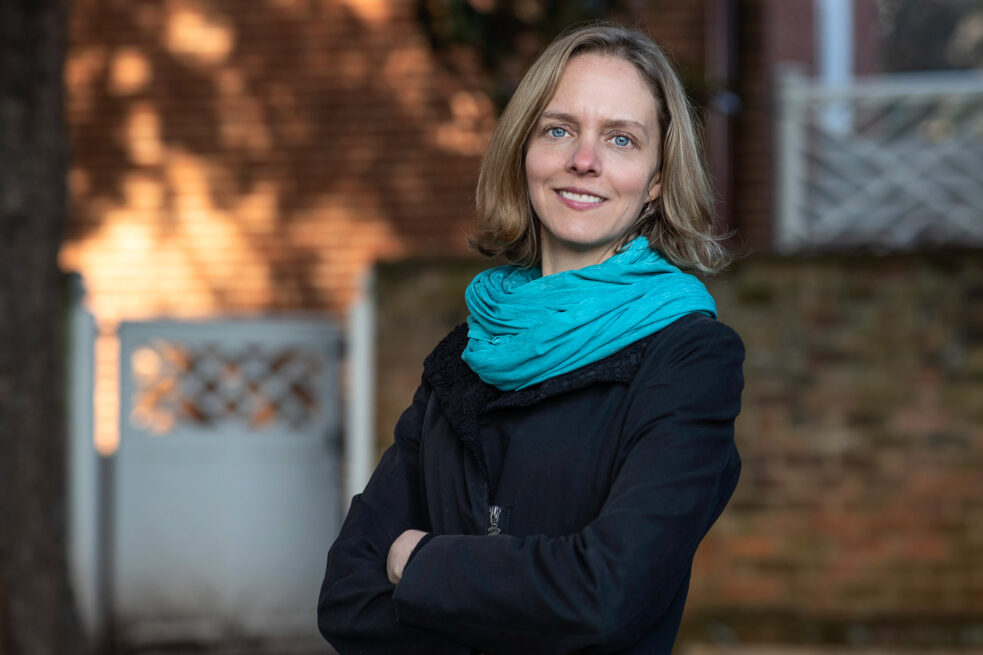
Fiona Greenland. Photo: Dan Addison/UVA
In the spring of 2022, research organizations in the United States, as well as individual experts in international humanitarian law, human rights, geospatial systems, and cultural heritage protection, joined forces to form the Conflict Observatory consortium in order to collect and publish evidence of Russian war crimes and crimes against humanity committed in Ukraine. The International Criminal Court relied on the data collected by the Observatory when preparing its arrest warrant for Vladimir Putin and Maria Lvova-Belova on suspicion of the illegal deportation and forced displacement of Ukrainian children to Russia, issued in early 2023.
The Observatory was funded by the US State Department. But in 2025, Donald Trump’s new administration significantly cut spending on international aid programs. As a result, in July, the Conflict Observatory ceased to exist .
Fiona Greenland is a historical and comparative sociologist at the University of Virginia, specializing in studying relationship between state violence and material cultural heritage. She joined the Conflict Observatory together with her colleagues from The Cultural Resilience Informatics and Analysis Lab (CURIA Lab) to describe and analyze the destruction of cultural heritage during the Russian war in Ukraine. In a conversation with Graty, she spoke about Conflict Observatory’s work and the destruction of culture and monuments by the Russian aggression. The researcher also drew attention to the low level of awareness about the extent of Russia’s crimes during the war in Ukraine among the academic community in the US and American society in general, reflecting on how to improve it.
All of this in her monologue for Graty.
Gathering information on Russian atrocities substantially furthered
The Conflict Observatory was a war crimes investigation program supported by the U.S. Department of State. It was created shortly after Russia’s full-scale invasion with the intention of using open-source information, including satellite information, to document potential violations of international law by Russian forces.
The structure from the outset was designed to foster independence among investigators. So what this meant was that the investigations were actually being conducted by university-based researchers. So the Yale Human Rights Lab was a core component of that initial year of investigating human rights violations. And so was a group out of the Smithsonian Museum and the University of Pennsylvania.
And then a Sudan conflict observatory was opened with members of the George Mason University.
In the second year of the program my university lab, the CURIA Lab at the university of Virginia, stepped in to take on the cultural heritage violations investigations. All of those features were in place for us to conduct the research independently with money provided by the U.S. Department of State. And another key component of the structure of this program was that the grant was managed by a [non-profit organization] called the MITRE Corporation.
A feature of the conflict observatory was that we had a three-person legal advisory board, our LPAC, Legal Policy Advisory Committee — trained human rights lawyers, who worked independently of the State Department, and independently of MITRE. And it was their job to review our findings, the kinds of open source information that we were collecting, and to review them for potential criminal and legal liability.
For example, my team, the CURIA, designed an investigation on the looting of or damage caused by Russian military activity to archaeological sites in Zaporizhia region. We wrote a report on this last September.
We used satellite imagery to observe Russian Federation Armed Forces activity in Zaporizhzhia and documented how they impacted kurgans. Kurgans are ancient burial mounds that are well known in this part of Ukraine, and they are protected under Ukrainian national law. When they placed military infrastructure on top of the kurgans, Russian troops damaged the stratigraphy, or the material layers that record the site’s cultural history.
We don’t know whether they took artifacts from the kurgans. This, too, would be a violation. And this brings me to one of the most insidious aspects of Russia’s full-scale war: until the occupied territories are liberated, we are unlikely to know the full extent of Russia’s assault on Ukrainian culture.
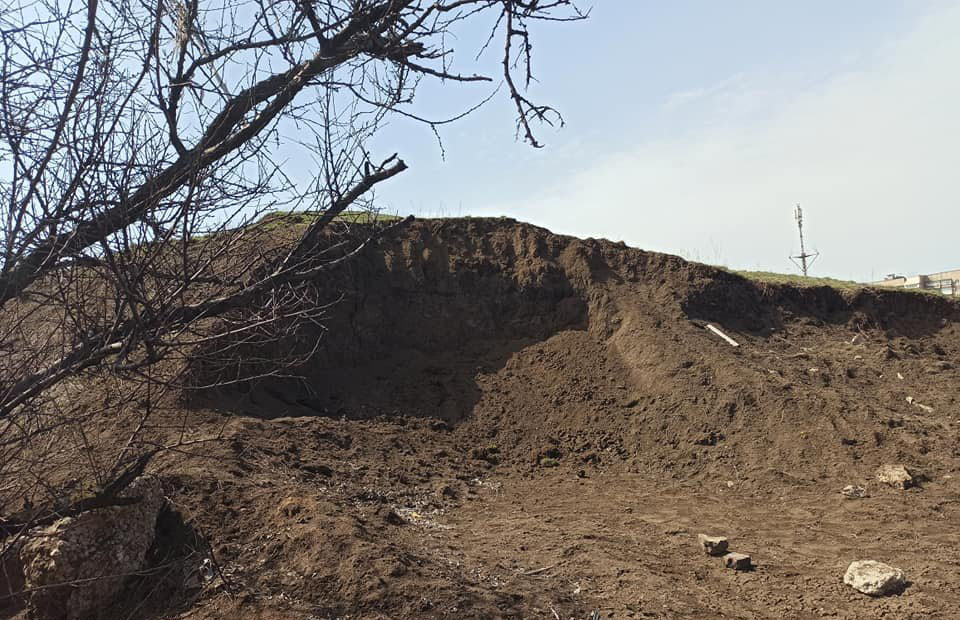
The destroyed Kurgan Did burial mound in Mariupol, March 26, 2024. Photo: Donetsk Regional Prosecutor’s Office
At that point, we conferred with our lawyers, who could draw our attention to which areas of both Ukrainian national law and international law could be pursued as implicated in the activities of the Russian Federation’s Armed Forces. We also were in conversation with Ukrainian researchers, including investigators at the Regional Center for Human Rights, a Ukraine-based NGO, and it Ukrainian archaeologists and scholars who had direct knowledge of that region.
Of course, they were not able to be there or to document as eyewitnesses due to the nature of the military invasion. But we were in conversation with them because we wanted them to know what we were seeing through the satellite imagery, and to see whether they had any information that could be openly shared with us that might inform our investigations in how much of Ukrainian cultural heritage could have been damaged, what kinds of objects might have been brought out of the ground. [We were also interested in the] archaeological, stratigraphic [data,] so important for understanding Ukrainian history in this part of the country.
We were a team of eight investigators, all of us with expertise in one or all of open source intelligence, satellite, geospatial. And then we had a ninth person, a student researcher.
Three or four of us trained in archaeology, in the international trade in cultural heritage objects. We had fluent Russian speakers, a fluent Ukrainian speaker.
We had decision making capacity over which incidents or events we chose to investigate. Sometimes we received requests from partners in Ukraine to study something or to help them assess something.
An example of this is our work on the Oskil Dam [in Kharkiv region, as] there was potential damage to culturally sensitive sites as a result of the catastrophic flooding of this dam in 2022. In this study, our chief geospatial analyst looked very carefully at the environmental impact. We were also in conversation with environmental lawyers and a member of the [Ukraine’s] OPG staff who was an expert in ecocide.
This investigation relied mostly on remote input. We had to rely on a fairly sophisticated method, assessing what the flood waters did to the soil and plant health, as well as checking the profile of the chemical imbalance in the water. This is an area where there had been a lot of agricultural activity that was important for the economy and for the food supply.
I do not consider that [the initial goals of Conflict Observatory were entirely met.] From my perspective, the key goals of gathering information on Russian atrocities was substantially furthered. Where I think we were stopped short by the program’s closure was the full pursuit of accountability.
I also need to say this, the children’s [kidnapping] investigation, which I was not a part of (that was the Yale team), it achieved a lot, including drawing the world’s attention to the tens of thousands of Ukrainian children, who have been kidnapped by Russian officials and Russian groups. And until they come home, the work is incomplete.
No longer a unified database
With the cessation of funding for the Conflict Observatory, the database itself was destroyed. Prior to this, however, we were able to extract our evidentiary files, bundle them into investigation packages and then prepare them for transfer to authorized legal accountability bodies — the Office of the Prosecutor General [in Ukraine] and Europol.
The data transfer included packages of evidence from major Conflict Observatory investigations into kidnapped children, filtration camps, the environmental damage, and cultural erasure.
My team members continue to be active in this space and I have active collaborations with three of my team members still doing OSINT investigation into Russian attacks on cultural heritage.
But this is no longer a unified database, so it it has to be accessed through particular topics and particular institutions which makes it so much harder. One of the things the database did was connect individuals to potential perpetrators of war crimes, tracking them across multiple incidents, locations and times.
It’s also important to talk about the intactness of the evidence that we collected. Because we know that there are strict admissibility rules for different legal bodies, including the International Criminal Court. At this point, it’s a question of how we maintain that chain of custody without the database, so that these data can continue to be admissible in court.

The looted antiquities hall of the Kherson Museum of Local History. November 17, 2022. Photo: Maxim Kamenev, Graty
Ukrainian cultural heritage objects absorbed into the Russian museum fund
In the book that I’m currently working on, which is provisionally titled “To Kill a Nation,” I’m focusing on this specific area of cultural erasure that is Russia’s attack on the Ukrainian nation. The concept that I explore is a concept developed by Ukrainian lawyers: natiocide, that is, the attempted death of a national community.
I’m focusing on language and literature. My book is actually looking at the ways in which the cultural, the national ideas and national practices of Ukrainians are under assault and how Ukrainians are defending them. A key tactic Russia employs to do this is to deny and erase Ukrainian culture. Resistance is flourishing, however, thanks to the courage, commitment and ingenuity of Ukrainians.
My focus is literary production—the people and institutions that make it possible for Ukrainian books to be produced and have a place in the world. Translators, authors, editors, publishers, illustrators, and the truck drivers who deliver paper to the presses: they protect Ukrainian literature from being destroyed by Russia, and they have created texts that help non-Ukrainians understand the experience of living through an attempted natiocide.
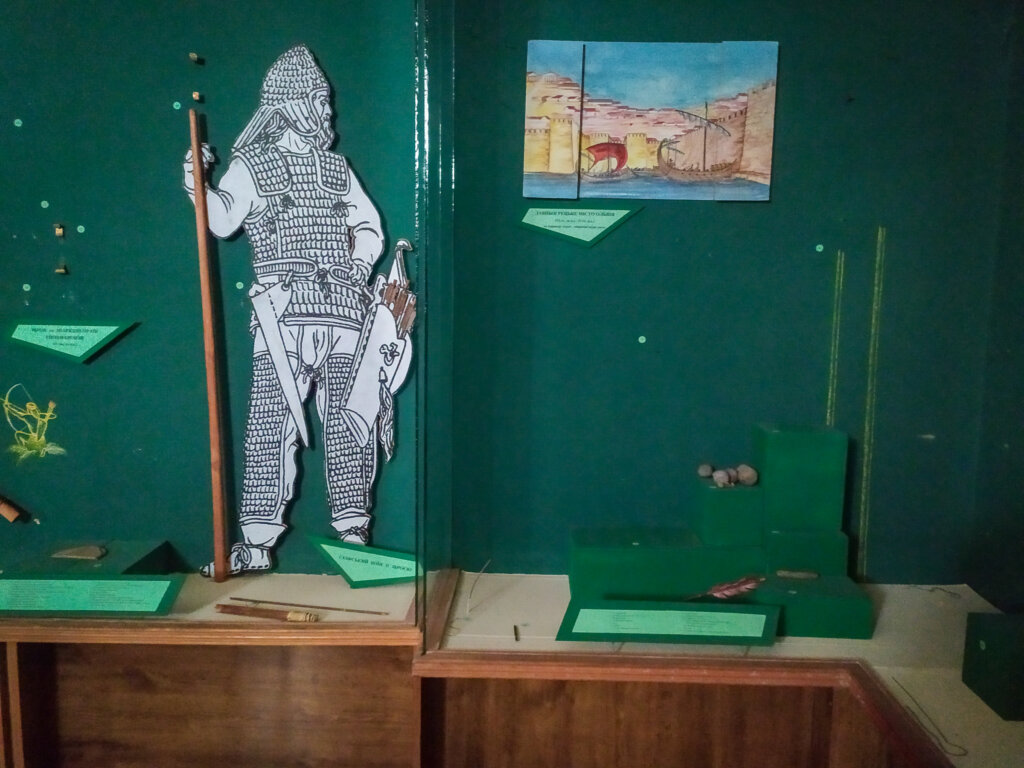
Looted stand at the Kherson Museum of Local History. Kherson, November 17, 2022. Photo: Maksym Kamenev, Graty
I think we have a few options for pursuing accountability for Russian attacks on Ukrainian cultural heritage. Speaking about the formal channels of legal justice, I know there is momentum within Ukraine right now to investigate activities involving the unlawful removal of cultural property from Ukrainian institutions. A well-known example would be the removal of almost the entire collection from the Kherson Fine Arts Museum.
We are also aware of the removal of large volumes of material from archaeological sites in Crimea, that’s been illegally occupied by Russia since 2014. We also know that in the temporarily occupied territories of Luhansk, Donetsk, Zaporizhzhia, there have been and continue to be removals from a range of cultural institutions.
So Ukrainian cultural heritage objects are being absorbed into the Russian state museum fund. There’s also the question of kinetic activity, such as indiscriminate hits of Ukrainian cities, and this can include cultural heritage sites and objects in the built environment.
So there have been many activities since the Russian full-scale invasion at the international level as well as the national level to look at how these violations can be pursued through international law.
In addition to the formal legal avenues or platforms, there are other institutional bases for pursuing accountability. We could think about sanctions. A number of Russian cultural officials have already been sanctioned and there’s potential to sanction more of them.
I personally believe soft power has not been effective. And here I mean collaborations between Russian cultural institutions and European and North American cultural institutions really, globally. I don’t think it’s been effective. It hasn’t visibly helped understanding [of the problem], and it’s certainly not doing anything to limit Putin’s homicidal and illegal invasion of Ukraine.
So what I think is that we need to use some of this information gathered to make a strong a case as possible to international bodies, including UNESCO and the International Council of Museums. And to redirect resources to strengthening Ukraine’s cultural heritage and also its cultural reputation. To really invest in knowledge building, relationship building. This can mean funding scholars to go abroad, funding scholars to come to Ukraine. We have to invest in reputational security. That’s just the term I’m going to go with in a way that the world really sees and understands and appreciates Ukrainian culture, history, knowledge, and epistemic contributions. [It’s vital] to make it robust, such that there is a widespread support for protecting it and seeking justice.

The Palace of Labor in Kharkiv, damaged by a Russian missile strike on March 2, 2022, September 3, 2024. Photo: Anastasia Moskvychova, Graty
Accountability starts with awareness and recognition
[In the U.S.,] there are significant gaps in the understanding [of this concern] among scholars and among the public.
I know that U.S. journalists have written about Russian attacks on and damage to visible, historic, iconic sites, UNESCO sites in Odesa, for example, or the illegal excavations and renovations at the Tauric Сhersonese in Crimea.
But there is not enough understanding of the attacks on people, on the culture makers, who have been killed. The hundreds of artists, writers, musicians, dancers, composers, poets, and so forth.
I don’t know what accountability looks like for them, but I think it starts with awareness and recognition. This is an area of cultural violence that is rarely discussed among American academics. I’m not talking about Ukrainianists, but rather a general body of scholars who work on cultural heritage. We don’t have nearly enough conversations about this. The same thing with the everyday attacks on smaller institutions, like churches in rural areas. I think here too about attacks on libraries and how thousands of books of Ukrainian literature have been deliberately destroyed by Russian Federation armed forces, set on fire, looted, ransacked, damaged. This is not being discussed [or] studied in any kind of sustained way. That would really give the full picture of Russia’s attack on cultural heritage. So we have a lot of work to do to fill those gaps.
We may play a role in strengthening Russia’s position
[In today’s political climate,] in my opinion — speaking not as a Conflict Observatory member, but as an independent researcher of Russian atrocities against Ukraine — the current U.S. administration has been uneven in expressing support for [achieving] accountability for war crimes. It has been uneven in the sense that the official spokespeople for the State Department and for the White House have been inconsistent in their stated intentions with regard to accountability, and they have been inconsistent with respect to funding. In fact, we know there are recommendations that war crimes accountability activities be discontinued or greatly reduced. And I don’t just mean regarding the Ukraine situation. I also mean regarding other places in the world where people are facing grave violations of human rights. This, to me, speaks volumes about where we are diplomatically and politically.
What I want Washington to understand is that the scale of Russian atrocities is staggering. The violations go beyond conventional warfare and into the realm of torture and exceptional crimes of terror and gruesome physical violations against Ukrainian civilians. Without consistency in U.S. funding and in U.S. diplomatic support, and, above all, in a moral commitment to protecting human beings here, we will weaken the global push and especially the Ukrainian push for accountability. And we may therefore play a role in strengthening Russia’s position. This to me would be a serious mistake.
Нашли ошибку в тексте?
Выделите ее и нажмите Ctrl + Enter
Выделите ее и нажмите Ctrl + Enter