Protection of Minors or Judicial Arbitrariness? Italy Allows Adoption of Ukrainian Teenager Despite Kyiv’s Ban
File photo: Evacuation of people from Mariupol. Photo: Stas Yurchenko, Graty
During the war, despite Ukraine’s ban on the adoption of its minors by foreigners, Italy set a controversial legal precedent. Recently, it came to public attention that on April 1, 2026, the Juvenile Court of Lecce (in the southern region of Puglia) granted permission for a local childless couple to adopt a Ukrainian teenager. His mother lives in the Sumy region and has not had her parental rights deprived. The boy arrived in Italy in March 2022 in a group of children temporarily evacuated from the Stepan Suprun Children’s Home in the city of Sumy.
Judges explained their decision by citing the minor’s wish to remain in Italy with his new family and the impossibility of restoring a supportive family environment in Ukraine. The verdict was delivered in the absence of the children’s official representative from Ukraine, who claims being unaware of the court proceedings. He describes the ruling as an abuse of judicial power and intends to appeal against it. Likewise, Ombudsman Dmytro Lubinets reacted sharply to the case: “The Italian court ignored Ukraine’s moratorium on intercountry adoption during wartime” and “violated international standards for the protection of children’s rights.” The Ukrainian Embassy in Rome has sent a verbal note to the Italian Ministry of Foreign Affairs. However, the adoptive family’s lawyer emphasized that the court based its ruling solely on Italian legislation on adoption in “special cases,” i.e., without treating this case as an “international adoption.” Italian state authorities have not commented on the matter. As evidenced by other court cases in the country concerning evacuated Ukrainian children, local courts are likely to ignore requests from the Ukrainian authorities and provisions of international conventions, issuing rulings based solely on domestic family law and the protection of minors.
Graty thoroughly examined the adoption case of a Ukrainian teenager from the Sumy region.
“The foster family expressed immediate interest in adopting the boy.”
“When I learned from my older daughter that my son was adopted in Italy, it hit me like a ton of bricks,” says Nataliya, the teenager’s mother, in a noticeably despondent tone (the woman asked not to disclose her current surname).
She has not seen her own child for five years. She lives in the Sumy region, in a village near the Ukrainian-Russian border. Her ex-husband — the father of her son — went to the frontline to defend the country and is now listed as missing in action.
The last time Nataliya spoke to her son on the phone was a few weeks ago, but he did not say a word about the changes in his life or that he had asked the court to allow his adoption by the Italian family. Ever since the mother learned about the Lecce court ruling, she has been unable to get in touch with her son, she says. The woman is convinced that the foster family is preventing him from communicating with his relatives.
“He never really told me anything extraordinary about his life there. Although during a phone call he once mentioned that the family’s aunt, who had come to visit and stayed with them for a while, had hit him on the head and back, and took away his laptop. I found out about this from my eldest daughter, and he later admitted it to me, adding that he wanted to return to Ukraine. He always wanted to come home. They bribed him with a motorbike, and he decided to stay,” added the boy’s mother.
In a telephone conversation, the woman told Graty that she had not received any notification from Italy regarding the start of legal proceedings concerning her son’s adoption abroad.
Before ending up in southern Italy, the boy had spent over six months with his two sisters in the children’s home in Sumy. They were placed in the children’s home for a year following a Ukrainian court’s decision to remove them from their parents; however, it did not revoke their custody rights.
“The father was unemployed, abused alcohol, and was causing brawls in the family, whilst the mother worked as a milkmaid on a farm in the Sumy region. The Ukrainian court’s ruling also states that the parents were irresponsible in fulfilling their parental duties,” the head of the Sumy Children’s Home Liubov Rudyka told Graty.
At the start of Russia’s full-scale invasion, a group of 25 children from the establishment were temporarily evacuated to Italy with the permission of the regional authorities. The group was invited by a local charity that the children’s home had already worked with, as they co-organized health-improvement trips. The children were placed with foster families, where two sisters ended up in one family and their brother in another. According to the head of the children’s home, no family was willing to care for all three siblings. In spring 2024, the girls returned to Ukraine: to the town of Berezhany in the Ternopil region, where the Sumy Children’s Home had been evacuated for safety reasons. Later, the head of the home placed the sisters with a Ukrainian foster family. The boy’s biological mother Nataliya told Graty she is currently dealing with the paperwork to have her two daughters returned to her, whom she sees regularly.
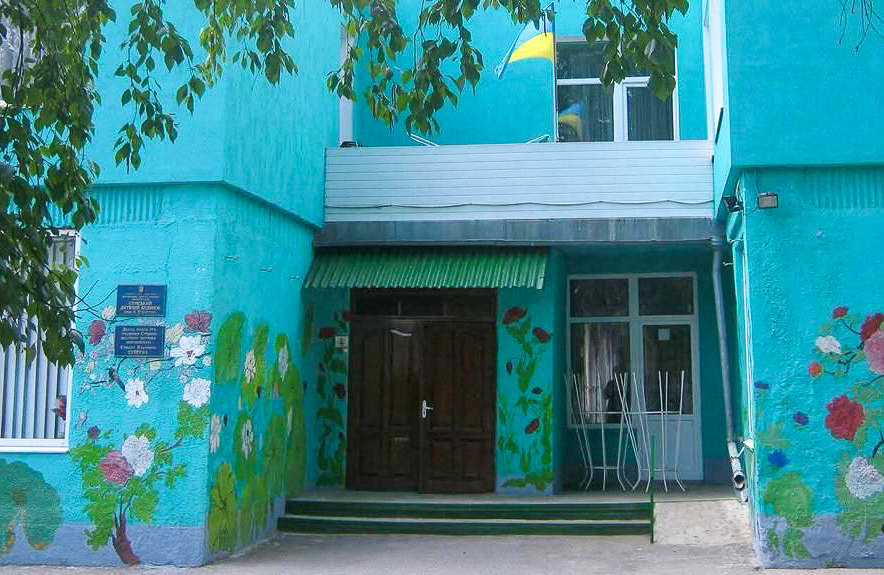
S. Suprun Sumy Children’s Home. Photo from the children’s home director Liubov Rudyka’s personal archive
When Liubov Rudyka was still in Italy in 2022, she tried, in her capacity as the facility’s director and the children’s guardian under Ukrainian law, to arrange meetings between the children in her care, at least between siblings. Although she notes: “It wasn’t easy.”
Other Ukrainian guardians also told Graty that Italian foster families often create obstacles and prevent children from having contact with Ukrainian representatives.
“This boy’s foster family kept looking for excuses to postpone the meetings, but one meeting eventually took place. It was a very emotional reunion between a brother and his little sister. Back then, the Italian foster family asked me if it was possible to adopt the teenager. I told them it wasn’t: Ukraine had suspended intercountry adoption, and he has parents and sisters, and isn’t registered for adoption. And when I found out about the court’s adoption ruling, I thought: this is terrible!” says Liubov Rudyka.
Ukrainian Representatives Absent During Court Hearing
For four years, the foster child from the Sumy Children’s Home lived with the Italian foster family to whom the Juvenile Court of Lecce had previously granted temporary guardianship for a period of 18 months. In May 2025, the couple’s lawyer filed an application with the court to adopt the teenager, who’s now almost 14 years old. A year later, after the court ruling was announced, it turned out that neither his mother nor the Consul General of Ukraine in Naples were aware of the proceedings.
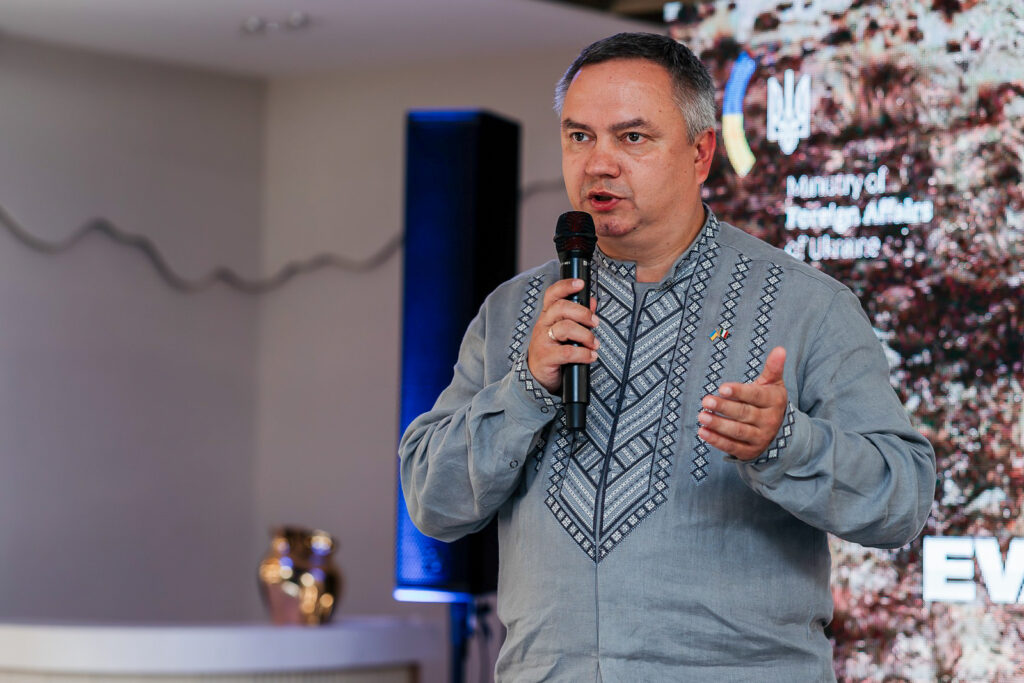
Maksym Kovalenko, Consul General of Ukraine in Naples. Photo from the consulate’s Facebook page
“We have not received any information from the court regarding this matter,” Consul General Maksym Kovalenko confirmed to Graty.
It is also important to mention that Ukrainian diplomats in Naples have been closely monitoring critical situations involving orphaned children and those deprived of parental care who were evacuated to southern Italy in early 2022.
Volodymyr Ivaniuta, the child’s temporary Ukrainian representative in Italy — whose status is recognized by the Italian authorities — was neither notified of the proceedings nor summoned to the court.
“They haven’t even informed me about the hearing regarding the adoption of my ward, so I was unable to respond to this situation in time,” Volodymyr Ivaniuta told Graty.
He added that local guardianship and judicial authorities had previously refused to return the boy to a safe place in his home country, citing the protracted wartime situation in Ukraine.
However, he eventually received the court’s decision approving the adoption of his ward via certified email, albeit several weeks after the ruling. According to Ivaniuta, the Italian authorities have never been in touch with the boy’s biological mother, but for some reason she was listed alongside Ivaniuta as a party that had failed to appear in court (participation in absentia).
Since Volodymyr Ivaniuta claims that he did not receive a summons, this may constitute a breach of procedural rights, and the decision should be appealed. This is precisely what he intends to do, especially in view of other critical aspects of the verdict.
“I strongly disapprove of this decision because these children are citizens of Ukraine. In this particular case, the boy has a biological mother who has not been deprived of her parental rights, and he was placed in a children’s home due to difficult financial and family circumstances. Nevertheless, the child should not be permanently placed under Italian care. We can agree to the minors staying here until the end of hostilities, but it is unacceptable for Italy to grant them permanent residency with no prospect of returning to Ukraine. Ukraine cannot be deprived of its citizens simply because Italian courts have arbitrarily approved their adoption. I will appeal the ruling of the Lecce court,” said Volodymyr Ivaniuta.
In his view, the foster family manipulated the boy, consciously prompted him to cut ties with Ukraine, and the child obeyed, perhaps to avoid conflict with the new family. In his capacity as Ukraine’s representative, Ivaniuta says he had no access to this boy due to the foster family’s opposition. In the legal battle, he is hoping for substantial support from the Ukrainian government at the political level.
“A volunteer (even if provided with an Italian attorney by the state) cannot handle Italy’s judicial system alone,” he adds.
Volodymyr Ivaniuta has lived and worked in Italy since 2011. The man used to organize health-improvement trips to the peninsula for Ukrainian children. In the spring of 2022, he helped organize and accompany their evacuation, and he was authorized by the children’s legal guardian — the head of the children’s home — to represent the children’s interests in Italy. The Consulate General in Naples has certified Mr. Ivaniuta’s authority. The duties of a Ukrainian representative abroad include looking after the evacuated children and facilitating their return to safe locations in their home country at the request of a Ukrainian legal guardian.
The Minor Agreed to be Adopted in Italy
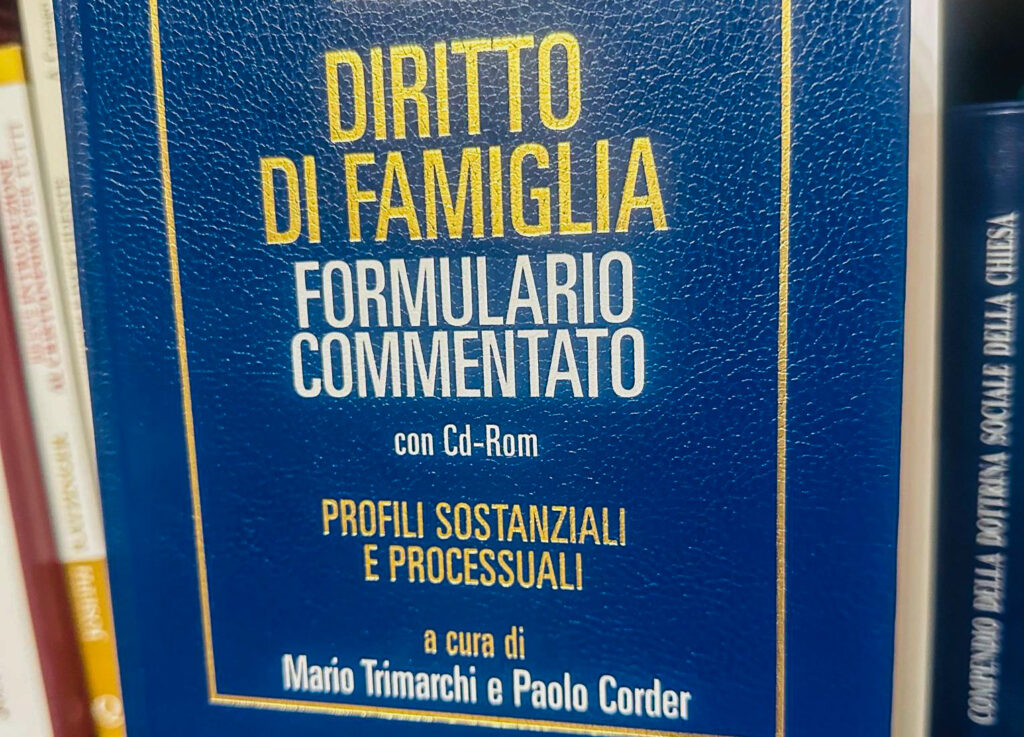
Italian Family Law. Photo: Nataliya Kudryk, Graty
The panel of judges made its decision based on the section of Italian Family Law on “ Adoption in Special Cases .” The judges stated that both the biological mother and Ukraine’s representative failed to appear at the hearing. They noted that the biological father “could not be located, as he is considered missing in action in the context of the Russo-Ukrainian war.”
The ruling of the Juvenile Court of Lecce states: “In Ukraine, the minor lived in a children’s home due to neglectful conduct of both parents. The biological father had been deprived of his parental rights, and the son has had a strained relationship with his mother, which further deteriorated as a result of occasional video calls. The minor expressed a wish to remain in Italy with the aforementioned family and stated his desire to become the applicants’ child.”
Citing a Ukrainian court ruling, Sumy Children’s Home director Liubov Rudyka told Graty that the boy’s father had never been deprived of his parental rights. It is therefore unclear why the Italian judges came to a different conclusion. Maurilio Marangio, the foster family’s lawyer, maintains that the case files submitted to the court in Lecce showed that the biological father’s parental rights had been revoked.
The text of the ruling fails to mention important contextual circumstances, namely that the child ended up in Italy four years ago precisely because of the war.
The ruling indicates Italy, not Ukraine, as the child’s habitual residence, as he has been living in the Puglia region for a considerable period of time — four years. Ukrainian human rights expert Aksana Filipishyna suggests this is how the Italian side invoked the provision of the 1996 Hague Convention on Parental Responsibility: a child’s habitual residence is considered to be the country where they have been living for more than one year.
“Ukraine has fallen into this trap, where another country can act in bad faith by exercising its jurisdiction to protect a child who has been in that country for a long time. This is, in fact, what Italy has done,” Filipishyna said in a comment to Suspilne.
Judges in Lecce emphasized the importance of the minor’s consent to be adopted by the aforementioned family and to remain in Italy. After all, under domestic law, a 14-year-old child cannot be adopted without their personal consent. The right to “be heard” during legal proceedings (oftentimes in family proceedings) is also guaranteed by the European Convention on the Exercise of Children’s Rights (Strasbourg, 1996).
Reports from the Italian social services, which conducted a socio-psychological assessment of the situation, highlighted the “harmonious growth and development of the child within this family; the boy felt integrated both into the family and the wider community.” The social services also spoke highly of the Italian couple. Having verified the other requirements, the court deemed the family suitable for adoption: the young Ukrainian boy was placed with this family, while adoption by another family was ruled out.
Questions remain as to why the court initially approved a childless couple for guardianship despite the provisions of Italian family law. The section “ On the Adoption and Guardianship of Minors ” provides that a minor who has temporarily lost a supportive family environment should, at the guardianship stage, preferably be placed with a family that has minor children of its own. It is also unclear whether the family in question was on the register of adoption candidates or merely on the list of families eligible for temporary guardianship, limited to a maximum of 24 months.
Discussing the situation with the Italian couple’s lawyer gave no clarity either. He referred exclusively to the social services’ conclusions and their positive assessment of the family. Ultimately, the court upheld the application to adopt the Ukrainian minor, stating that this was done “with a view to ensuring the child’s best interests and protection, in contrast to the previous family environment, which has fallen apart and wasn’t apt to provide support for him.” The ruling further states that, under national adoption law, the court authorized the change of the Ukrainian minor’s surname, undoubtedly to an Italian one. The boy will take a double surname after his adoptive father and mother.
“Now, the child has two families.”
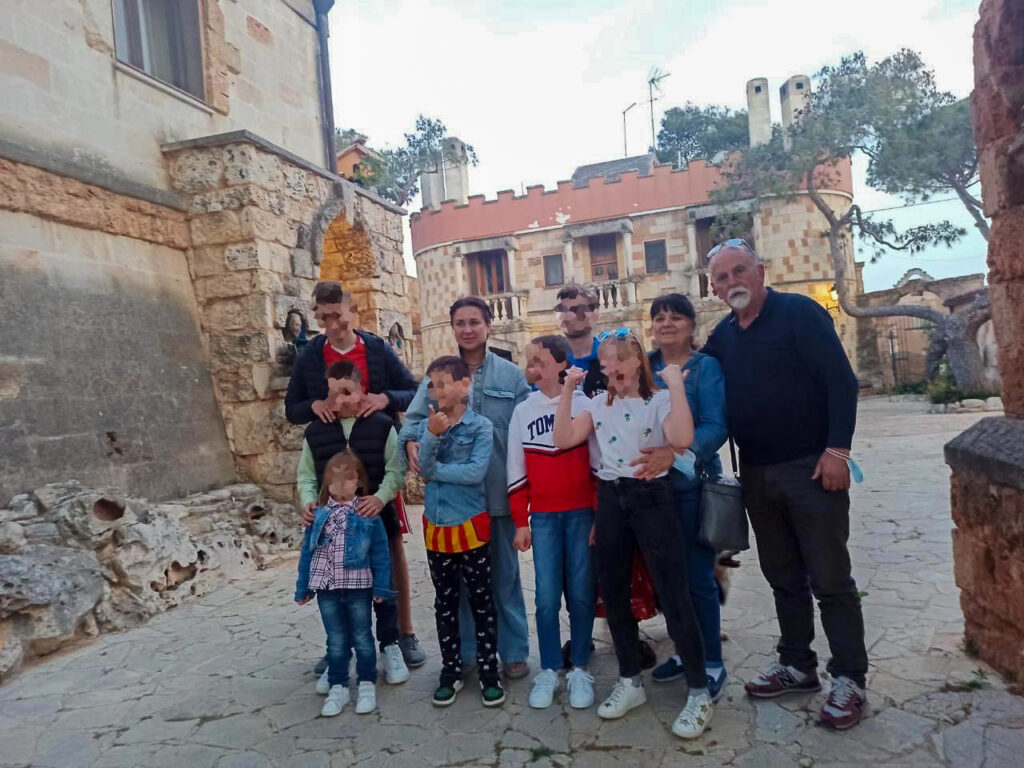
A group of foster children during their stay in Italy. Photo from the children’s home director Liubov Rudyka’s personal archive
In a conversation with Graty, the Italian family’s lawyer Maurilio Marangio expressed his surprise at the Ukrainian side’s negative reaction and defended the validity of the local court’s ruling. He explained that amid the various types of adoption under Italian law, this case does not constitute a full intercountry adoption, but a partial or so-called open adoption authorized “in special cases” in the national Family Law.
“Under our legislation, adoption ‘in special cases’ is used when a foster family has formed a strong emotional bond with a child. In this type of adoption, a minor does not sever ties with their biological family. Upon reaching the age of majority, they will be able to return to Ukraine if they wish to. This can be viewed as the Italian family offering support to the child’s biological family in Ukraine, helping to raise and care for their son. A similar situation occurred when the ‘Children of Chornobyl’ arrived in Italy in large numbers. Legally, it appears that the boy now has two families, even though he lives in Italy. I can assure you that the teenager remains in contact with his mother and sister in Ukraine. His sisters had also been in Italy previously; they expressed a desire to return home, and they did, whereas the boy wanted to stay,” said the lawyer, Mr. Marangio.
According to him, Ukrainian representatives may have met the boy only once over the years, “but showed no interest.” When asked about information obtained by Graty indicating that official Ukrainian representatives had attempted to speak with the minor, the lawyer maintained that no such contact had taken place.
“The child’s wellbeing is my top priority. I can assure you that the boy has settled in well with the family; he does not feel that his foster parents are holding him back in any way, and he asked them to adopt him — and the family agreed,” added the family’s lawyer.
He dismissed any suggestion that the adoptive parents, who work for a local private company, may have had any material interest in the adoption. The law does provide financial support for such families; however, according to the lawyer, such support only exists on paper, and in reality the opposite is true.
According to Ukrainian human rights advocate Aksana Filipishyna, intercountry adoption is possible only with the consent of the parents and the country of origin, and only when it is impossible for the child to be placed in Ukraine.
Regarding possible procedural violations in the handling of the case, Maurilio Marangio said the following:
“Once an official Ukrainian representative had been appointed for the minor, the court revoked the Italian guardian’s powers. The representative [Volodymyr Ivaniuta] was registered to receive all court documents via certified email. I sent him all previous notifications and the court ruling, but unfortunately, I never saw him in court because he failed to appear. I have all the documents confirming that he had received the correspondence. I also wrote to the Consulate General in Naples and received no response. I wrote to the district council in Ukraine, where the boy’s mother lives, and received no response. The President of the Panel of Judges in Lecce is very meticulous about ensuring that all parties are officially summoned, and I provided her with all the relevant documentation. I even sent a letter to the boy’s mother by post and received a reply signed by her confirming that she had received the summons. Therefore, his mother was aware of the proceedings.”
In response to this remark by the Italian family’s lawyer, Volodymyr Ivaniuta, the teenager’s Ukrainian representative, claims: “This is utter nonsense. It may be that, technically, something was sent to some non-existent addresses, but de facto, we — the Ukrainian representative, the Consulate General in Naples and the mother — have not received anything.”
Maksym Kovalenko, the Consul General in Naples, confirmed to Graty that the consulate had not received any reports regarding the proceedings.
“I met [on May 5] with the Head of the Juvenile Court in Lecce. Our institution is not listed in the case files because we are not a party to the proceedings,” said Consul General Kovalenko.
According to him, the biological mother of the adopted boy is currently preparing to lodge an appeal. As Graty has discovered, the Consulate General in Naples is actively involved in preparing the appeal and the defence strategy for the Ukrainian side, in collaboration with the teenager’s representative and an Italian lawyer.
In order to find out how the relevant Italian authorities responded to the controversial adoption case, Graty contacted five government bodies: the National Guarantor for Children and Adolescents, the Regional Guarantor for Children and Adolescents, the Italian Ombudsman, the Governmental Commission for Intercountry Adoptions, and the Ministry of Foreign Affairs and International Cooperation. Most offices were unaware of the case or the reaction to it in Ukraine. They said they intended to look into the matter and refused to give any further comment. National Guarantor for Children and Adolescents, Marina Terragni, told Graty she had sent a request to the Italian Ministry of Foreign Affairs. Her representative in Puglia, Ludovico Abbaticchio, said the issue was “extremely delicate and judicially significant in an international context,” claiming he’d contacted the Head of the Juvenile Court in Lecce to clarify the situation.
Ukrainian Ombudsman: International standards for the protection of children’s rights have been breached
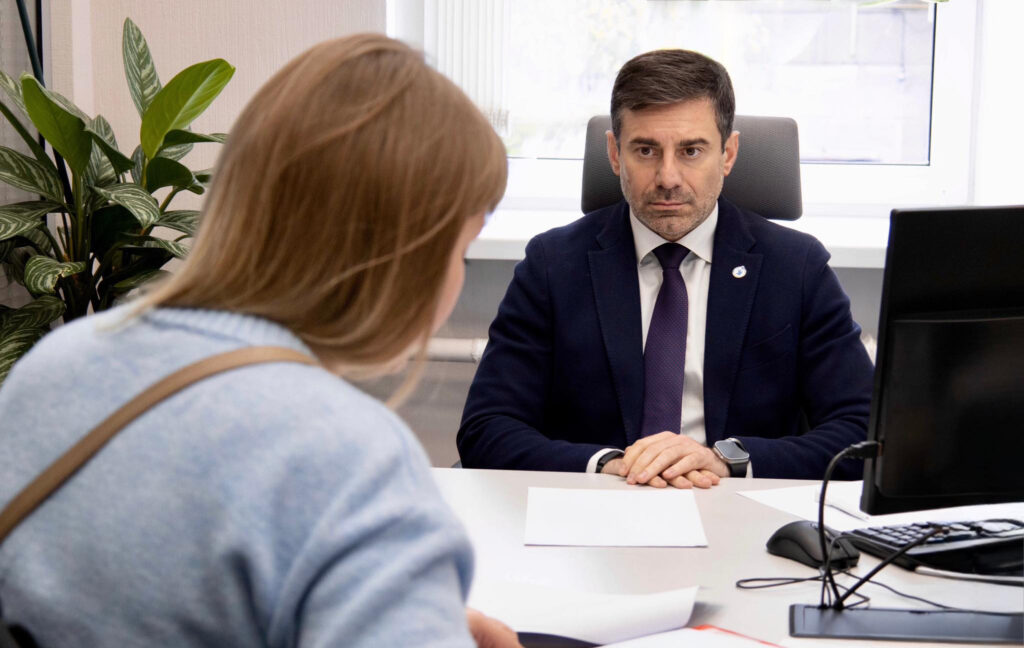
Dmytro Lubinets, Ukrainian Parliament Commissioner for Human Rights. Photo: Ombudsman of Ukraine
Dmytro Lubinets, the Ukrainian Parliament Commissioner for Human Rights, reacted sharply to the Italian court’s decision, demanding that the ruling be appealed and the teenager returned home. By placing a Ukrainian child with a foreign family, the court in Italy has undermined the international adoption system, stated the Ukrainian Ombudsman.
“This decision grossly violates international standards for the protection of children’s rights. After all, the priority is clear: to keep the child within their family and country of birth. But in this specific case, the Italian court not only ignored the moratorium [Kyiv’s ban on intercountry adoption during the war] but also the fact that the child has a family: a mother and biological sisters,” Dmytro Lubinets emphasized on his Facebook page.
He also noted that the case was not an isolated one in Italy. Similar risks have been identified regarding almost one hundred children from the Chynadiivo Preschool Educational Institution (Zakarpattia region), the «Smarahdove Misto» Sanatorium and Health Improvement Centre for Social Rehabilitation (Donetsk region), and the S. Suprun Sumy Children’s Home. Graty’s article covered in detail the changes in the legal status of Ukrainian minors and the court cases preventing the children’s future return to their homeland. The Ombudsman’s Office has also recorded similar issues in Germany and Switzerland.
Graty has obtained the text of the verbal note sent to the Italian Ministry of Foreign Affairs by the Ukrainian Embassy in Italy. The diplomats have requested a review of the Lecce court’s decision in accordance with domestic legislation and Italy’s international obligations. Having analyzed the court ruling, Ukrainian diplomats suggest that the proceedings failed to examine in detail the family situation and the child’s legal status in Ukraine, nor did they consider the potential for the teenager to be placed in their country of origin, as required by international standards on the protection of minors’ rights.
It is clear that the appeal of the Lecce court’s decision could be a lengthy process, and the boy could turn 18 before a final ruling is reached. He is almost 15 years old at the moment, and his mother in Sumy has just one wish: “I want him to come back to Ukraine… so that we can all be together.”
Translated by Yustyna Kravchuk, edited by Anna Kravets.
Знайшли помилку в тексті?
Виділіть її та натисніть Ctrl + Enter
Виділіть її та натисніть Ctrl + Enter