Russia forces captured Ukrainian artillerymen to pay compensation for the destruction of Mariupol caused by Russia itself
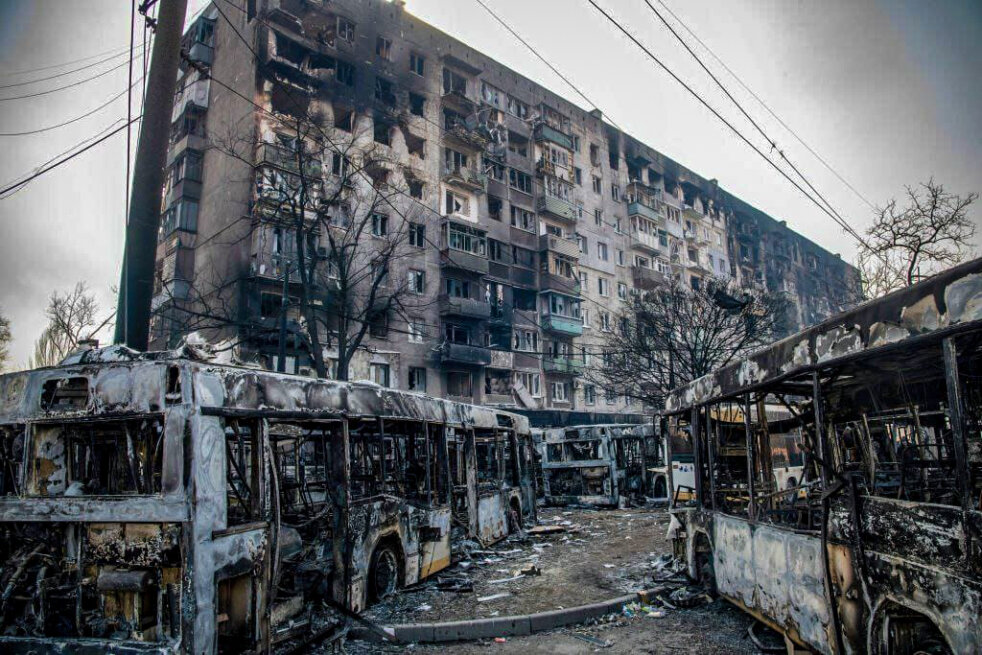
Mariupol, 2022. Photo: “Mariupol Now” Telegram channel
Among the defenders of Mariupol were artillery divisions of the 36th Separate Marine Brigade and the 17th Separate Kryvyi Rih Tank Brigade. Fighters from these units were taken prisoner in April 2022. Together with members of the then Azov Regiment and the 55th Separate Artillery Brigade, who surrendered from Azovstal in May 2022, Russia decided to shift responsibility for the destruction of Mariupol’s civilian infrastructure and nearby villages onto them. Some were additionally charged with attempted murder or the killing of civilians. In addition to prison sentences ranging from 20 years and more, the artillerymen are being forced to pay compensation for damaged buildings, while also being charged for the services of state-appointed Russian lawyers.
Journalists from Graty spoke with former prisoners of war from the 36th Brigade, Ivan Yaroshchuk and Artem Shvydkyi, as well as the wife of Vitalii Titarenko from the tank brigade, who remains in captivity. The outlet also examined data on compensation claims in Russian registries. Here is a detailed account.
Rosgvardia officers “turned into” civilians in tracksuits
Ivan Yaroshchuk, commander of the 1st Rocket Artillery Battery of the 36th Marine Brigade, was captured during the first attempt by Ukrainian units to break out of the Illich Iron and Steel Works in April 2022. On the night of April 10–11, the group of servicemen that included Yaroshchuk, moving through tree lines and fields, encountered Russian positions. Russian forces opened fire on them and then surrounded them.
The next attempt by the remaining troops to leave the partially encircled plant—this time toward Zaporizhzhia—resulted in heavy losses of personnel and equipment. Those who stayed on the plant’s territory were taken prisoner by Russian forces. Only a group of 250 servicemen under the command of Serhii Volynskyi managed to break through to the Azovstal steel plant and unite there with the Azov unit.
The forces of the Mariupol garrison continued to hold the defense in complete encirclement for another month, but in May 2022 the servicemen surrendered into captivity following an order from the Commander-in-Chief. Only some of them have since been returned in prisoner exchanges. More than 1,500 defenders remain in Russian captivity.
For Ivan Yaroshchuk, captivity lasted two and a half years. During this period, he was constantly transferred between various detention facilities in Russia. He spent the longest time—more than a year—in the Kursk pre-trial detention center. He also spent four months in Penal Colony No. 10 in Mordovia, known for its especially harsh detention conditions and inhumane treatment of prisoners of war. In the final period before his release as part of a prisoner exchange in October 2024, Yaroshchuk was held in the Makiivka penal colony in occupied Donetsk region. He had been transferred there after sentencing: on April 19, 2024, the Russian “Supreme Court of the DPR” sentenced him to 22 years in prison on charges of attempted murder and cruel treatment of civilians.
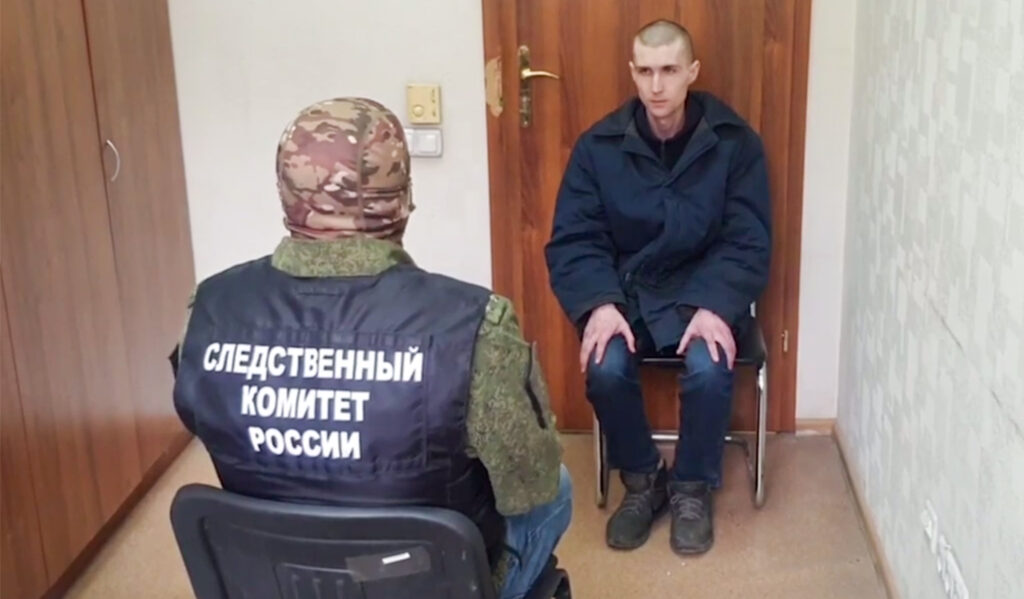
Serviceman of the 36th Brigade Ivan Yaroshchuk in Russian captivity. Photo: Investigative Committee of Russia
Yaroshchuk became a suspect in November 2023, shortly after being transferred to a detention center in Kamyshin, Volgograd region: during interrogations, one of the prisoners mentioned the shelling of a vehicle that had driven past one of the Ukrainian observation posts in Mariupol. When Yaroshchuk himself was questioned about the episode as a witness, he stated that the vehicle contained military personnel. The driver and passengers were dressed in black Rosgvardia uniforms and wore armbands and leg bands characteristic of Russian troops.
In the criminal case, however, Russian investigators wrote that Ukrainian servicemen had fired at civilians. The Rosgvardia officers “turned into” men in dark tracksuits, while their vehicle allegedly bore white ribbons on the side mirrors and door handles.
According to the case materials, the vehicle was driving along Nikopolskyi Avenue near the Azovmash plant when fire was opened on it with a Kalashnikov rifle. The driver and passengers, however, managed to flee the vehicle unharmed. According to the final version presented by the Russian investigation, Yaroshchuk allegedly gave the order, while his subordinate, Vladyslav Veselovskyi—who was also taken prisoner—carried out the shooting. Investigators attributed a motive to both men: political and ideological hatred.
According to a statement published on the official Telegram channel of the Investigative Committee of Russia, Yaroshchuk admitted guilt during the trial. However, after being released from captivity, he told Graty—as did other convicted prisoners of war interviewed by the outlet after returning to Ukraine—that he agreed to the charges under coercion.
“They formally inform you of certain rights, but in reality you have none,” Yaroshchuk says. “You supposedly have the right not to testify against yourself, but that only exists on paper. At first you may still endure [the beatings and torture], but your health does not improve. And if this keeps happening regularly, it only gets worse over time. Sometimes you make certain confessions simply to preserve your health, and eventually you think: fine, let them put me on trial.”
He can now share his own version of the events for which he was prosecuted.
“When civilians are moving around, it’s obvious: there are signs saying ‘People,’ ‘Children,’ white ribbons, sometimes even white flags attached to the vehicles. And they drive cautiously because they know combat is ongoing and military personnel are stationed there. But this was simply a car speeding toward the position from a street that had actually been blocked off, meaning civilians did not drive there—they could walk further on, but they did not drive there,” the serviceman explains. He adds that another observation post had also spotted the vehicle and informed him that Russians were approaching. Enemy sabotage and reconnaissance groups operated constantly in the encircled city.
According to Yaroshchuk, warning shots were fired toward the vehicle. After that, it stopped and several men ran out of it.
“We saw them running out, we saw them taking cover. They left the vehicle there and simply fled,” he says.
The shelled vehicle was never found, and investigators spent a long time trying to determine its color and make because witnesses—other prisoners of war—gave conflicting testimony.
“One person says it was a sedan, another says it was an SUV, someone else says it was a station wagon. Everyone’s testimony was different, different colors of the car. It was obvious these were people being interrogated and tortured, just trying somehow to preserve their health by giving at least some kind of testimony. Even when I already had an investigator, I told him it was a different vehicle. But they still wrote things their own way and later somehow merged [the testimonies] into one version. Then they changed the vehicle, and eventually both my testimony and Veselovskyi’s stated that it was a gray Toyota sedan, as it appeared from a distance,” Yaroshchuk recalls.
Neither Yaroshchuk nor Veselovskyi was ever taken to Mariupol to the location where the events they were accused of allegedly took place. At the demand of Russian investigators, Ivan Yaroshchuk had to mark the location of his position at Azovmash on a map. His fellow serviceman Vladyslav Veselovskyi, meanwhile, was required to imitate firing a burst from an assault rifle at the vehicle—a so-called investigative experiment conducted inside a detention center office.
Yaroshchuk decided for himself that he would not agree to everything the Russian investigators tried to pin on him, and he attempted to hold that line despite being subjected to physical and psychological coercion.
“With the car incident, it was only classified as attempted murder, not the murder of civilians, so somehow that passed. If you don’t set some kind of limit for yourself, they can pin anything on you—even rape. And murder,” the serviceman says.
After Kamyshin, Yaroshchuk was transferred to Taganrog. Two weeks later, he was moved again—this time to Donetsk, where he was to stand trial. On April 18, 2024, the prisoner was taken from the Donetsk guardhouse to a court hearing at the “Supreme Court of the DPR.” This court in Donetsk became part of the Russian judicial system after Russia illegally declared the annexation of the occupied territories on September 30, 2022, and incorporated Donetsk region into the Russian Federation.
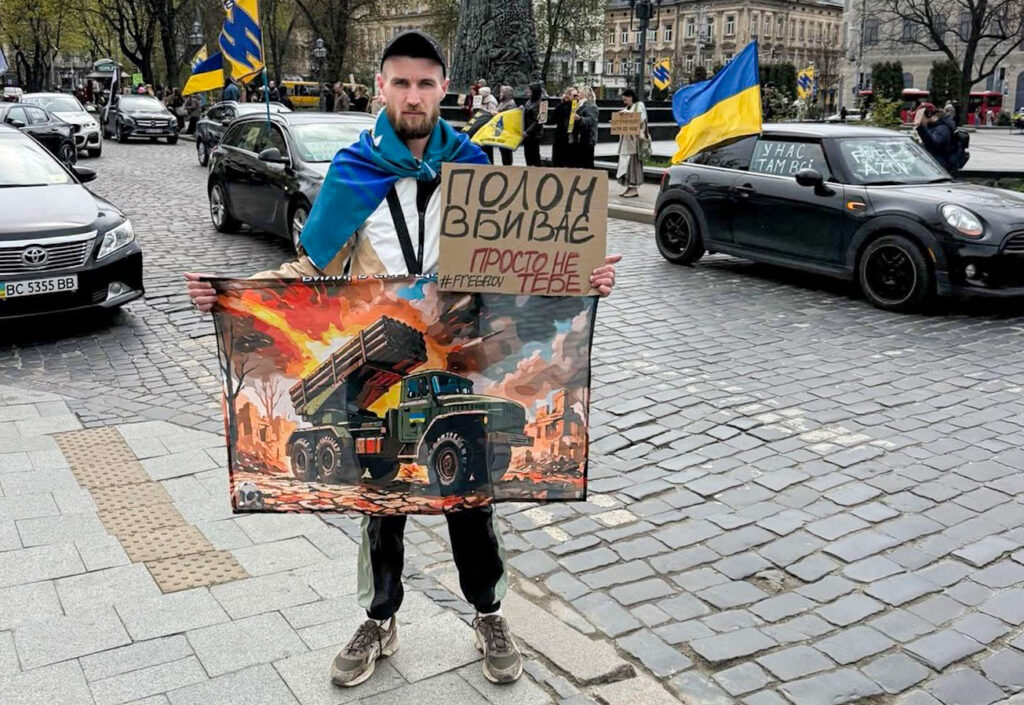
Ivan Yaroshchuk, serviceman of the 36th Brigade, after being released from captivity. Photo: Yaroshchuk’s Facebook page
During the hearing, the prosecutor read out the case materials, including witness testimony, and requested a sentence of 22 years’ imprisonment for the defendant. Judge Vitaly Sirotin—appointed by Vladimir Putin to the court in occupied Donetsk from a district court in Chelyabinsk in late September 2023—agreed with the proposed sentence. Yaroshchuk’s verdict was delivered online on April 19, while the prisoner of war himself remained in the Donetsk detention center.
“You just sit there and listen; obviously, you do not object,” Yaroshchuk says about his participation in the trial.
In the same case, platoon commander of the rocket artillery unit Vladyslav Veselovskyi had been sentenced a week and a half earlier—the verdict, delivered by former Ukrainian judge Dmytro Yeromin, was identical. According to Yaroshchuk, Veselovskyi was supposed to be included in a prisoner exchange but was removed from the list at the last moment. He remains in captivity.
Shelling of Staryi Krym
In October 2025, the “Supreme Court of the DPR” handed Vladyslav Veselovskyi another sentence.
Together with Maksym Nychyporuk, deputy commander of a rocket artillery battery of the 36th Brigade, and fire platoon commander Maksym Chiliieiev, he was accused of deliberate destruction of civilian infrastructure, attempted murder, and cruel treatment of civilians.
According to the charges, in March 2022, from positions at the Azovstal metallurgical plant, they repeatedly carried out targeted fire against residential buildings and other civilian facilities in Mariupol and the settlement of Staryi Krym on the northeastern outskirts of the Kalmiuskyi district of the city. Residential houses and utility buildings were allegedly damaged, although civilians were not harmed “because they managed to hide in a safe place.” This is how the accusation was formulated in a statement published on the Telegram channel of the Investigative Committee, which handled the case.
Judge Alexander Yelchaninov—transferred by Vladimir Putin to Donetsk from a district court in Russia’s Samara region in late September 2023—found the artillerymen guilty. He increased Veselovskyi’s sentence to 23 years, while sentencing Nychyporuk and Chiliieiev to 21 years each in a maximum-security penal colony.
Heavy fighting continued near Staryi Krym throughout February and March as the Russian army tightened the siege around Mariupol. In particular, on March 2, the National Police of Ukraine reported that Russian bombardments had severely damaged School No. 46 and a bakery in the settlement.
“We were at Azovstal from March 2 until around the 20th. We never fired in that direction [toward Staryi Krym],” recalls Ivan Yaroshchuk. “Because by the time we moved to Azovstal, our forces were still there [in Staryi Krym], while from Azovstal we were firing in completely different directions.”
After the occupation of Mariupol, journalists from Skhemy identified one of the sites of a mass burial at the cemetery in Staryi Krym using satellite imagery. According to Mariupol Mayor Vadym Boichenko, the Russians ordered that the bodies of Mariupol residents killed during the Russian offensive be buried there.
During the assault on Mariupol, Russian troops brutally and deliberately targeted civilian critical infrastructure, residential neighborhoods of the city, and surrounding settlements, dropping aerial bombs and shelling them with artillery from land and sea. The destruction triggered a humanitarian catastrophe in Mariupol. Thousands of civilians were killed, while the exact death toll remains concealed by the Russian authorities to this day.
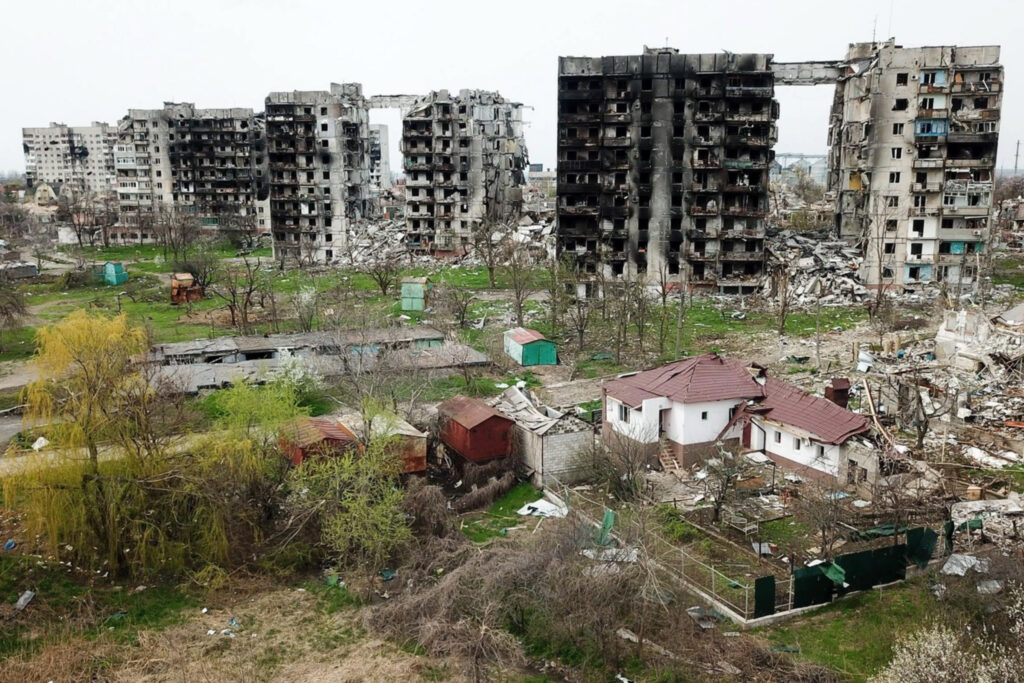
Mariupol, destroyed by Russian forces. Photo: Russian state news agency TASS
Despite numerous documented violations of international humanitarian law committed by the Russian army during the siege of Mariupol—recorded by investigators from Human Rights Watch, Truth Hounds, SITU Research, the United Nations Independent International Commission of Inquiry, and other independent human rights organizations—Russian investigators are attempting to prove that it was Ukrainian forces who destroyed residential buildings, municipal facilities, and other civilian infrastructure in the city.
To that end, the Russian Investigative Committee, headed by Alexander Bastrykin, opened at least ten group and individual criminal cases against artillery personnel from units of the Armed Forces of Ukraine and the National Guard who participated in the battles for Mariupol. According to information from the official Telegram channel of the Investigative Committee, reviewed by Graty, Russian authorities convicted fighters from the 36th Marine Brigade, the 17th Separate Tank Brigade, the 55th Separate Artillery Brigade, and Azov Brigade on charges of destroying residential and administrative buildings in Mariupol and nearby settlements.
According to Graty’s calculations, the cases involve at least 73 prisoners of war. The Russian Investigative Committee opened the artillery shelling cases during the siege of Mariupol itself, while the first verdicts began appearing in late 2023. All the cases, including several tried in absentia, were heard by the so-called “Supreme Court of the DPR.”
In particular, this concerns servicemen of the rocket artillery battalion of the 36th Marine Brigade. They were tried as a group in December 2024 on charges similar to those brought against Veselovskyi, Nychyporuk, and Chilieiev. Seven members of the battalion—Andrii Shestak, Vladyslav Yavorskyi, Vadym Shulha, Serhii Yampolskyi, Maksym Kolbasin, Volodymyr Penzyn, and Kostiantyn Romaniuk—were sentenced to 24 years of imprisonment each. For two other marines, Dmytro Shalar and Nazarii Moroz, this was already their second sentence. As a result, the court sentenced Shalar to life imprisonment and Moroz to 28 years in prison. They had previously been convicted allegedly for shelling vehicles carrying civilians and for murder.
In reality, it was Russian forces that shelled people attempting to flee Mariupol by car. As researchers from Truth Hounds noted in their 2022 reports on the situation in Mariupol, Our City Was Gone and Beneath the Rubble, which documented the destruction of the city and attacks on civilians, it was nearly impossible for civilians to leave the besieged city during the first half of March 2022. Official agreements on the safe evacuation of civilians repeatedly collapsed due to resistance from the Russian side. In the second half of March, Mariupol residents began attempting to leave at their own risk in private vehicles organized into improvised convoys. In addition to shelling, they faced filtration procedures at checkpoints controlled by Russian forces. People were also forced to evacuate toward territories under Russian control.
Russian investigators also planned to convict Ivan Yaroshchuk on charges related to the shelling of Staryi Krym. According to the artilleryman, the Russian Investigative Committee interrogated him repeatedly in connection with this case but did not manage to formally charge him before he was exchanged.
“As the commander of a rocket artillery battery, they had a lot of questions for me,” Yaroshchuk recalls. “Almost everywhere I was held—in Kursk, Novozybkov, and Taganrog—they questioned me [about the shelling of populated areas] superficially, but in Mordovia they wanted to pin this case on me.”
He says he could be summoned several times regarding the same case whenever investigators in the regions received instructions from Moscow—that is, from the Main Investigative Directorate of the Investigative Committee—to clarify or add certain details.
According to Yaroshchuk, investigators also conducted interrogations concerning the alleged use by Ukrainian forces of phosphorus munitions, the use of which against civilian infrastructure and civilians is prohibited under Protocol III on Prohibitions or Restrictions on the Use of Incendiary Weapons to the 1980 United Nations Convention on Certain Conventional Weapons. However, according to Yaroshchuk, the case was never pursued further. As of now, Graty has not found any verdicts based on such accusations.
The Case of the 33
The shelling of the settlement of Staryi Krym also appeared in another criminal proceeding in which 33 more Ukrainian servicemen were convicted in February 2024: five artillerymen from the self-propelled artillery battalion of the 36th Brigade, together with 28 fighters from the Kryvyi Rih-based 17th Separate Tank Brigade. In this case, the Russian Investigative Committee claimed that in February and March 2022, from combat positions between Hnutove and Lebedynske—villages east of Mariupol—as well as from the territory of Azovmash in the Kalmiuskyi district of the city, they fired at least 15 high-explosive fragmentation shells toward residential buildings in Staryi Krym and eastward toward Sartana, Sakhanka, and Talakivka. According to the prosecution, these attacks allegedly damaged or destroyed 42 houses and two civilian vehicles, while a 17-year-old boy was killed and a woman suffered a brain concussion—both civilians. At the same time, all these accusations were attributed equally to all 33 servicemen.
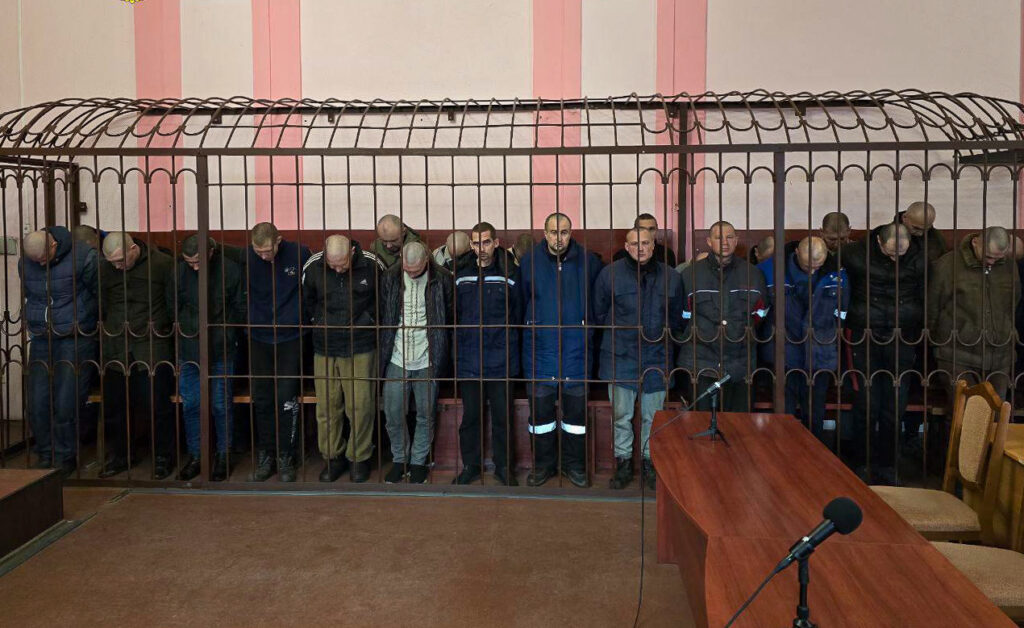
Thirty-three Ukrainian servicemen tried in the so-called DPR court. Photo: Prosecutor General’s Office of the Russian Federation.
From this group, the Russian Investigative Committee brought charges of cruel treatment of civilians against Lieutenant Colonels Roman Shostak and Oleksandr Plotnikov, as well as Senior Lieutenants Denys Nazarov and Serhii Paliichuk, as early as the first half of May 2022. According to a video published on the Investigative Committee’s Telegram channel, Plotnikov was taken to Mariupol for an investigative reenactment, where he demonstrated the weapons allegedly used by the servicemen under his command and the directions in which they supposedly carried out shelling. He also reportedly stated that he had acted on Shostak’s orders. At the time, the Investigative Committee estimated the total damages at 24.8 million rubles.
When serviceman Artem Shvydkyi of the 36th Brigade was transferred in the summer of 2023 to a prison colony in Horlivka in occupied Donetsk region from detention facilities in Russia, he was also added to the existing case concerning the shelling of Staryi Krym as an alleged executor of the criminal orders issued by his commanders.
After returning from captivity, Shvydkyi recalled that in Horlivka he was summoned for interrogation approximately four times to the investigative department of the Russian Investigative Committee for the Joint Group of Forces, located in Donetsk. At first, he was treated as a witness, but he quickly became a suspect and later an accused person.
“They simply needed more people in the case. And because we—the 36th Brigade and the 17th Tank Brigade—had the same assignments [during the fighting], they merged us into a single case,” Shvydkyi believes. “It was a separate case concerning the artillerymen of the self-propelled battalions.”
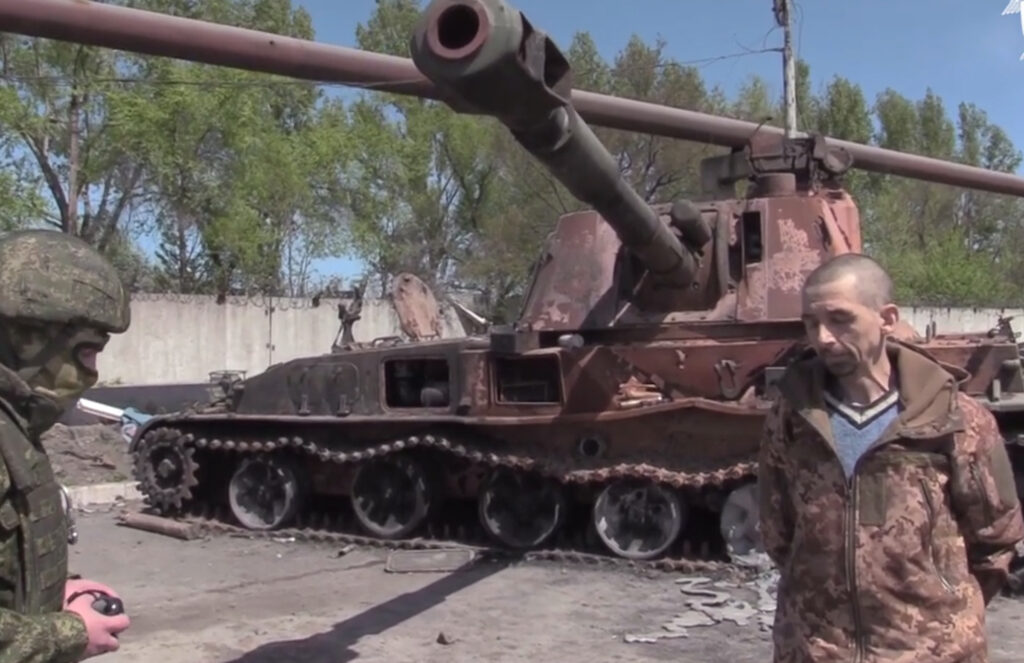
Lieutenant Colonel Oleksandr Plotnikov in Russian captivity. Photo: Investigative Committee of Russia
He remembers investigators talking among themselves during interrogations. They were deciding whether to add more defendants to the case. From those conversations, Shvydkyi understood that the leadership demanded a certain number of convictions, and that prisoners of war could be accused—or not accused—of war crimes according to that principle.
No one could refuse the charges or even learn in detail what they consisted of: they were not allowed to ask questions, and had to sign testimony blindly. At the same time, the servicemen hoped they would not serve the full sentences and would instead be released in prisoner exchanges.
“By that point, we already understood how these cases were fabricated. We had come from Russia, and over there everything is extremely harsh. You are only allowed to slightly open one eye when they tell you to, and sign. That’s all. They may not even read the entire case file to you,” Shvydkyi explains.
After him, more defendants were added to the case, including Vitalii Titarenko, Vadym Marchenko, and Roman Tkachov from the 17th Tank Brigade, who were transferred to Horlivka from Russian penal colonies in the fall of 2023.
Titarenko’s wife, Maryna Dudnyk-Titarenko, recalls how in October 2023 she was able to briefly speak with her husband for the first time in more than two years: with investigators’ permission, he called her via Telegram video chat. Before that, the only information she had received about Vitalii came from released prisoners of war, who said he was in poor condition and could barely walk. But before the trial, Maryna says, “they cleaned him up a little.”
The hearings were scheduled for early February 2024.
In a video published by the Russian Prosecutor General’s Office on February 7, all 33 defendants are led into a huge cage in the courtroom in groups. The men enter bent over and holding onto one another. Those who entered earlier sit hunched down on a bench so that their faces cannot be seen. Then everyone is ordered to stand, but only the commanders are allowed to raise their heads.
“They were poorly dressed, wearing some lousy sweaters, all twisted over—completely different people,” Maryna says of her impression upon seeing the footage.
Her husband was not in the front row, but she still managed to spot him behind one of his fellow servicemen.
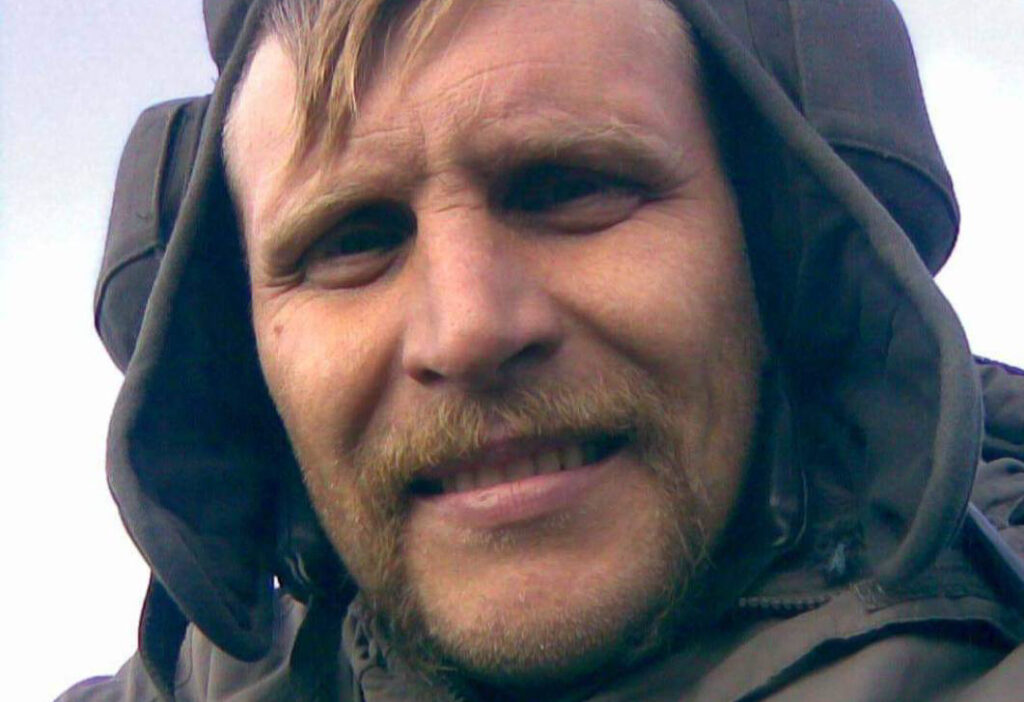
Vitalii Titarenko, serviceman of the 17th Tank Brigade. Photo: from Titarenko’s Facebook page
Artem Shvydkyi, who was also inside that cage, recalls that before the hearing the investigator warned everyone to admit guilt and confess that they had carried out criminal orders. If anyone denied the charges, the court session would simply be postponed to another day, the defendants would undergo a “corrective conversation,” and they would still be forced to confess at the next hearing.
According to him, the case included testimony from several individuals. However, during the trial the prosecutor stated that one witness “is not in our state,” while another had died. The state prosecutor requested prison terms of at least 30 years for the prisoners of war. The defense lawyers, Shvydkyi says, argued for reduced sentences, emphasizing that most of the servicemen had merely followed orders. Judge Vladimir Plyukhin—transferred to the “Supreme Court of the DPR” from a court in Saratov, Russia, in late 2023—announced the verdicts: 27 years of imprisonment for rank-and-file soldiers and sergeants, and 28 to 29 years for commanders.
“In court, they emphasized that we carried out the shelling out of hatred toward the people of Donetsk region. That we deliberately shelled it in order to destroy their homes, buildings, and civilians. That we did it out of hatred toward Russians and the ‘DPR,’” Shvydkyi says.
Artem Shvydkyi is currently the only person from this group of convicted servicemen who has been returned to Ukraine. He was released in February of this year after spending nearly four years in captivity.
Claims worth millions
In addition to receiving lengthy prison sentences, the prisoners of war were also ordered to pay procedural expenses, including the fees of lawyers appointed to them by the Russian state as legal aid during the trials.
Ivan Yaroshchuk recalls that the lawyer assigned to him—whom he saw for the first time during the hearing—was primarily interested during the closing arguments in whether he had money or contact with relatives who could pay for the lawyer’s participation in the proceedings. In the end, the prisoner of war remembers being ordered to pay 7,000 rubles (4,130 hryvnias) for his defense.
Artem Shvydkyi likewise says that he was forced to pay for a lawyer he had not been allowed to refuse—5,000 rubles (2,950 hryvnias).
Some of their fellow servicemen were subjected to even larger financial claims. In particular, Vitalii Titarenko, an artilleryman of the 17th Tank Brigade convicted in the same case as Shvydkyi, was ordered to pay 46,000 rubles (27,142 hryvnias).
“That’s a considerable amount of money. We had to pay it because things were bad for the guys. We were looking for ways to do it,” says his wife, Maryna Dudnyk-Titarenko.
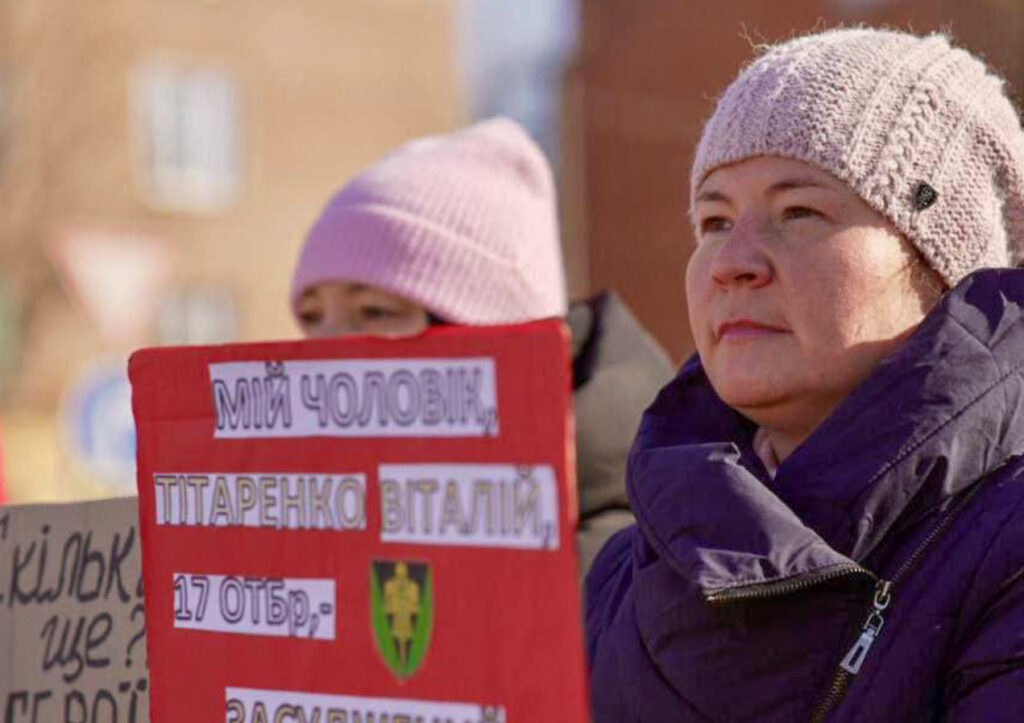
Maryna Dudnyk-Titarenko, wife of captured serviceman Vitalii Titarenko of the 17th Tank Brigade. Photo: SVOI Kryvyi Rih
In addition, Titarenko, Shvydkyi, and the other prisoners in the so-called “case of the 33” were ordered to pay compensation for buildings and vehicles in Mariupol and its outskirts that they allegedly destroyed. This was justified by court rulings in civil lawsuits supposedly filed against them by Mariupol residents recognized as victims in the case. The amounts to be recovered were listed in writs of execution that the prisoners received in the penal colony. Information about the issuance of these writs is recorded in the prisoners’ case files on the official website of the “Supreme Court of the DPR.” According to the same records, the court was supposed to forward them either to the civilian plaintiffs or to court bailiffs. However, data from the website of the Federal Bailiff Service (FBS) indicates that the enforcement of these civil claims was carried out by bailiffs themselves, meaning that in such cases the money was paid into the Russian state budget.
These amounts can be found on the portal of Russia’s Federal Bailiff Service (FBS), where they are listed as debts. On average, they ranged from 6 to 8 million rubles.
In particular, when Artem Shvydkyi arrived at Kirov Penal Colony No. 33 in January 2025, he received a writ of execution ordering the compulsory recovery of more than 8 million rubles (5 million hryvnias) from him. (A colony document obtained by Graty states the amount as 8 million 26 thousand rubles; however, according to Shvydkyi, the original debt was 900 thousand rubles higher.)
“We started receiving claims from these so-called victims (…) There were surnames, amounts, and descriptions of what had allegedly been destroyed. The [Russian] state supposedly compensated them for the damage, and then we were paying the state back,” Shvydkyi says.
The payments were automatically deducted from the wages the prisoner of war earned through labor in the penal colony—work was mandatory. Without those wages, Shvydkyi says, it was impossible to buy any goods in the prison store, including basic necessities such as hygiene products.
Shvydkyi chose to work in the colony’s sewing workshop rather than as a general laborer. The prisoners sewed workwear for factories. Working days lasted from Monday to Friday, from 7 a.m. to 5 p.m., though they could be kept longer.
“There are 10 of us working in the workshop, and we have to produce 60 suits. How we divide the work among ourselves is up to us. But they demanded that quota from us,” the man says.
A prisoner could earn 10,000 rubles (5,900 hryvnias) per month. However, according to the serviceman, 30% was deducted from prisoners of war as taxes, while another 45% went toward compensation payments under court enforcement orders. In addition, convicted prisoners were required each month to “voluntarily” write off several thousand more rubles from their accounts.
“So in the end I earned maybe 500 rubles (293 hryvnias) net,” Shvydkyi calculates.
From the wages of those prisoners of war who did not have enforcement orders, deductions were made not only for taxes but also for food expenses.
“My relatives also transferred money [to my personal account]. They could take one or two thousand from the money my family sent as a ‘voluntary repayment.’ But my relatives would send me 10,000, so I still bought things for myself because I needed soap [and other items],” Shvydkyi says.
Before his release, by his own estimates, he had already paid around 180,000 rubles (106,000 hryvnias) in compensation.
Shortly before the exchange, the colony administration told Shvydkyi to withdraw the money from his personal account. He guessed then that he would probably be going home: during transfers between penal colonies, prisoners’ funds are normally transferred together with them. Shvydkyi decided to transfer his money to another prisoner of war in order to help him.
“The guys who are still there will keep paying. Maybe they’ll divide my claim among them somehow—I don’t know,” Shvydkyi says.
According to him, his debt was canceled before his release, and Vladimir Putin pardoned him in the case, although the prisoner of war had never requested such a pardon. There is currently no information about Shvydkyi’s debt on the FBS portal.
As Graty has established, writs of execution appear in the files of at least eight cases involving artillerymen from the 36th Brigade, the 55th Brigade, the 17th Brigade, and the Azov Brigade on the website of the “Supreme Court of the DPR.” The records indicate that these writs were forwarded to bailiffs not only in the occupied part of Donetsk region, but also in Russia’s Rostov and Saratov regions. In addition to the defendants in the “case of the 33,” who were ordered to compensate victims for moral and material damages, the FBS portal also lists “debts” for four other prisoners of war in separate cases: procedural expenses ranging from 19,000 to 29,000 rubles.
Russia could potentially sell prisoners’ property in occupied territories over “debts”
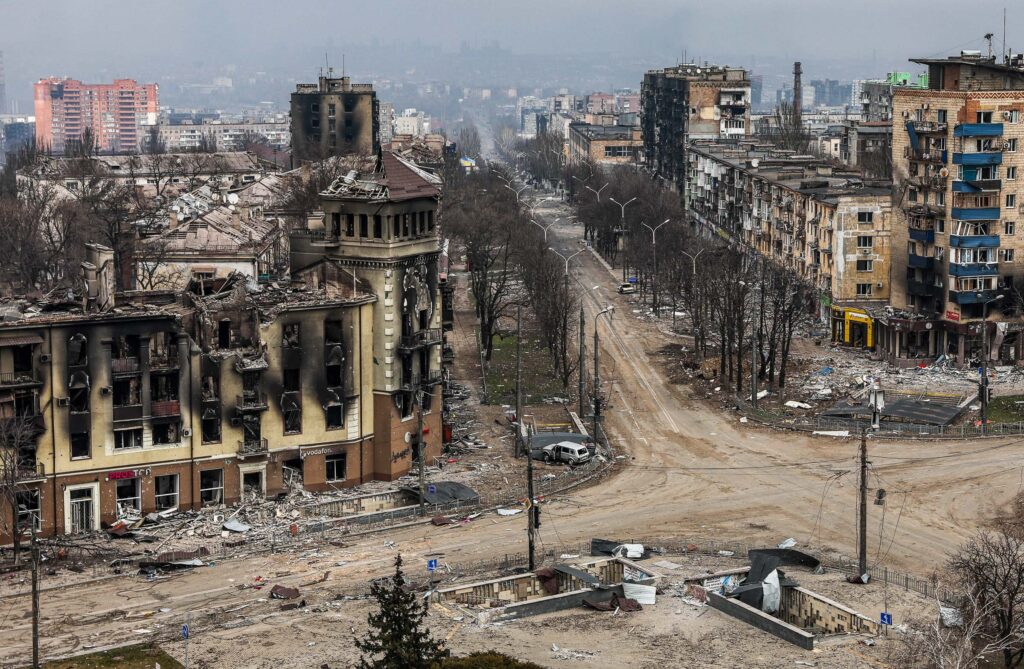
Mariupol destroyed by Russian troops. Photo: Russian state news agency TASS
Lawyer Andrii Yakovlev, an expert in international humanitarian and criminal law at the Media Initiative for Human Rights, who also advises prisoners of war and their families, stressed in comments to Graty that the verdicts against Ukrainian prisoners of war are unlawful, primarily because of systematic violations of key fair trial guarantees. Consequently, demands for compensation based on such verdicts likewise have no legal force.
At the same time, he notes that Russian procedural legislation provides for the recovery of procedural expenses from convicted persons.
“In practice, we see verdicts stating that convicted prisoners of war are exempted from such payments because of difficult financial circumstances—in those cases, the expenses are covered by the federal budget. In other cases, however, funds are recovered directly from the convicted individuals. Since we do not have free access to the materials of these cases, we currently cannot analyze or identify any clear patterns,” lawyer Yakovlev says.
The lawyer also points to the potential risks posed by such debts for prisoners of war.
“Based on decisions derived from unlawful verdicts, enforcement proceedings are initiated. And because many defenders of Mariupol and their families own property in temporarily occupied territories, Russian bailiffs effectively gain the ability to seize such property. (The seizure of a debtor’s property includes its arrest, confiscation, and forced sale.) Convicted servicemen are deprived of their property without any effective opportunity to protect their rights. During criminal proceedings, at least formally, a defense lawyer is provided. But when enforcement is carried out against a convicted person’s real estate, the state provides no legal assistance. That means it is unclear how such seizures are conducted and at what prices the property is sold,” Andrii Yakovlev explains. However, human rights defenders say they have not yet documented actual cases of such seizures.
Graty asked the Coordination Headquarters for the Treatment of Prisoners of War about this practice in Russian courts, but had not received a response by the time of publication.
After the occupation of Mariupol and nearby settlements began, the leadership of the so-called “DPR” announced plans to compensate for destroyed housing and infrastructure. On July 30, 2022, Denis Pushilin signed the corresponding decree. Reconstruction of Mariupol is ongoing. At the same time, the occupation authorities are erasing evidence of Russian war crimes, while courts attribute those crimes to Ukrainian prisoners of war.
The article was written with the support of the International Renaissance Foundation. The views expressed herein are those of the authors and do not necessarily reflect the position of the International Renaissance Foundation.
Знайшли помилку в тексті?
Виділіть її та натисніть Ctrl + Enter
Виділіть її та натисніть Ctrl + Enter